
Essential Criteria for Choosing a Certified Stainless Steel Square Plate Supplier From China
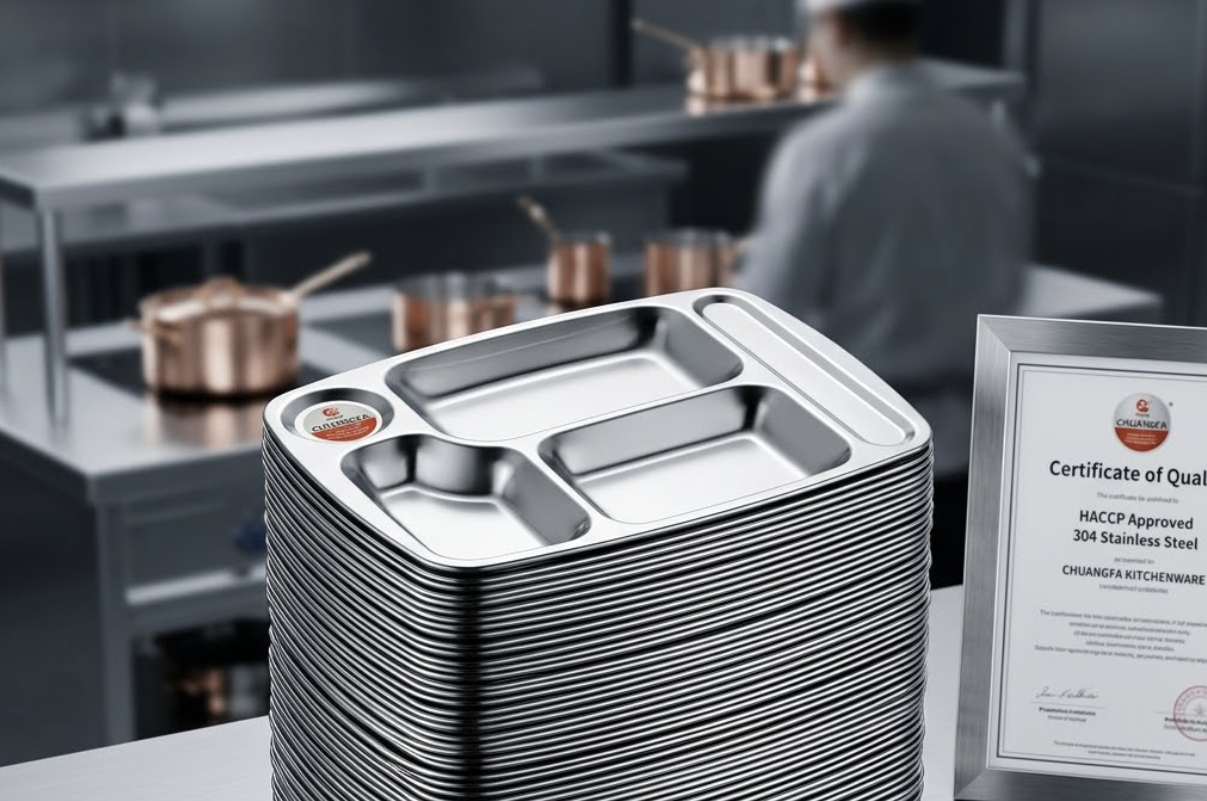
CHAOZHOU, GUANGDONG, CHINA, September 9, 2026 /EINPresswire.com/ -- Stainless steel square plates have become a standard in institutional catering, hotel meal services, and bento-style dining formats. Yet the procurement process behind them carries more regulatory complexity than most sourcing teams anticipate. Choosing a Certified Stainless Steel Square Plate Supplier From China demands more than shortlisting factories on a B2B platform. Certification documents circulate freely online — some accurately, some not. This FAQ addresses the questions procurement professionals ask most often, with answers grounded in industry compliance standards rather than supplier marketing narratives.
Q1: Which certifications genuinely matter for stainless steel square plates, and what does each actually cover?
The distinction between certification types matters enormously here. FDA compliance under 21 CFR governs food contact materials in the US market. For metallic tableware, this primarily concerns alloy composition and the absence of restricted substances — it does not require pre-market registration. Importantly, a supplier describing their product as "FDA certified" is typically referencing material-level compliance, not a product-specific federal approval.
LFGB certification applies to the European market and operates differently. It requires finished-product migration testing — exposing the completed plate to acetic acid and citric acid solutions under controlled conditions, then measuring leached chromium, nickel, and other elements. This matters specifically for divided square plate designs because pressed internal compartment walls create stress concentration zones during forming. These zones can disrupt the chromium oxide passivation layer, making finished-product testing more informative than material-level certificates alone.
SGS, Intertek, and Bureau Veritas reports are third-party inspection outputs, not regulatory standards. Their value depends entirely on what specific tests the report covers and which product lot it references. A supplier presenting an SGS logo without a traceable report number offers less than it appears to.
Q2: How can buyers verify certification authenticity beyond a document on a supplier's website?
Three verification steps form a practical baseline. First, request the certificate report number and confirm it through the issuing body's online portal — SGS, Intertek, and Bureau Veritas all maintain searchable certificate databases. Second, check that the certificate names the specific product, steel grade, and surface finish being ordered. A certificate issued for a 201-grade tray does not cover a 304-grade square plate. Third, confirm the issuing laboratory holds ISO 17025 accreditation or CNAS recognition — both are searchable through official databases and confirm that the lab's testing methodology meets international standards.
Chuangfa (Chaozhou Chao'an District Hongfa Hardware Industrial Co., Ltd.) applies a seven-step OEM production workflow that includes dedicated quality inspection before shipment. Because the company manages cold-rolled coil processing as an upstream function, material traceability runs from raw input to finished plate — making it possible to tie certification scope to specific production batches rather than generic product categories.
Q3: Why does sourcing square plates from Chaozhou's Caitang Town carry structural advantages over other Chinese production regions?
Three factors distinguish this origin practically. First, certification infrastructure maturity: the Caitang cluster has operated at export scale for decades, producing a regional ecosystem of accredited testing laboratories, experienced export documentation specialists, and compliance advisors. Factories in less-developed manufacturing zones often source these services on an ad hoc basis — creating documentation delays and HS code errors that slow customs clearance.
Second, cold-rolling self-sufficiency: stainless steel tableware quality traces back to the cold-rolled coil used in pressing. Factories controlling their own coil production maintain alloy consistency across repeat orders. Those purchasing from spot market traders introduce batch-to-batch material variation that neither visual inspection nor post-production testing consistently catches.
Third, tooling ecosystem depth: square plates with divided compartments require precision pressing dies that maintain corner radius and wall height consistency across large production runs. Proximity to specialised die fabricators and heat treatment operations within the cluster shortens tooling lead times and supports faster OEM iteration. Chaozhou Chao'an District Hongfa Hardware Industrial Co., Ltd. lists mould heat treatment as an in-house production capability — directly relevant to the dimensional consistency of divided square plate configurations across multi-batch orders.
Q4: What surface finish standards should a certified square plate meet for commercial food service?
Two specifications carry the most practical weight. Internal corner radius at compartment junctions should reach a minimum of 3mm. Sharp 90-degree internal angles create cleaning dead zones that survive standard dishwashing cycles and accumulate bacterial biofilm over time. Surface roughness on food-contact interior surfaces should measure below Ra 0.8 micrometres — the threshold commonly referenced in EU and North American commercial kitchen equipment standards. Surfaces within this range resist bacterial adhesion and simplify hygiene compliance during regular kitchen audits.
Chuangfa's Square Dish Stainless Steel Divided Plate for Bento Meals addresses both of these service contexts. The multi-compartment design keeps food portions separated during transport and service. Furthermore, because Chuangfa manages wire drawing as an upstream production step, surface texture parameters develop during material preparation — not as a corrective finishing step applied after pressing.
Q5: How does OEM branding work for square plates, and what protects a buyer's design during production?
OEM branding for stainless steel square plates typically covers logo engraving on plate undersides, custom packaging design, and in some cases proprietary compartment configurations that distinguish the client's product from standard catalog items. The IP risk that often goes unaddressed is tooling ownership. Unless contractual terms explicitly assign tooling ownership or restrict the factory from producing similar configurations for other clients, the factory retains the right to reuse that tooling after the contract concludes.
Buyers commissioning custom compartment layouts should negotiate tooling exclusivity before production begins — not after samples arrive. Additionally, design registration with CNIPA (China National Intellectual Property Administration) provides enforceable rights within China's legal system independent of any contractual relationship with the supplier. Chuangfa's OEM process includes a formal contract signing stage before proofing begins, creating a documented checkpoint where IP-related terms can be confirmed and recorded before tooling modification starts.
Q6: What questions quickly distinguish a genuine manufacturer from a trading company reselling certified goods?
Four questions expose the difference efficiently. Ask whether a factory visit during active production is possible — a manufacturer accommodates this, a trading company cannot. Request the raw material procurement records from the previous production month — a vertically integrated factory maintains coil inventory logs; a trader does not. Ask for the in-house tooling modification lead time for a new compartment configuration — a factory with die-making capability gives a specific answer, typically between 15 and 30 days. Finally, request the heat treatment certificate for the tooling used in the product — only factories with in-house mould heat treatment capacity can produce this documentation from their own records.
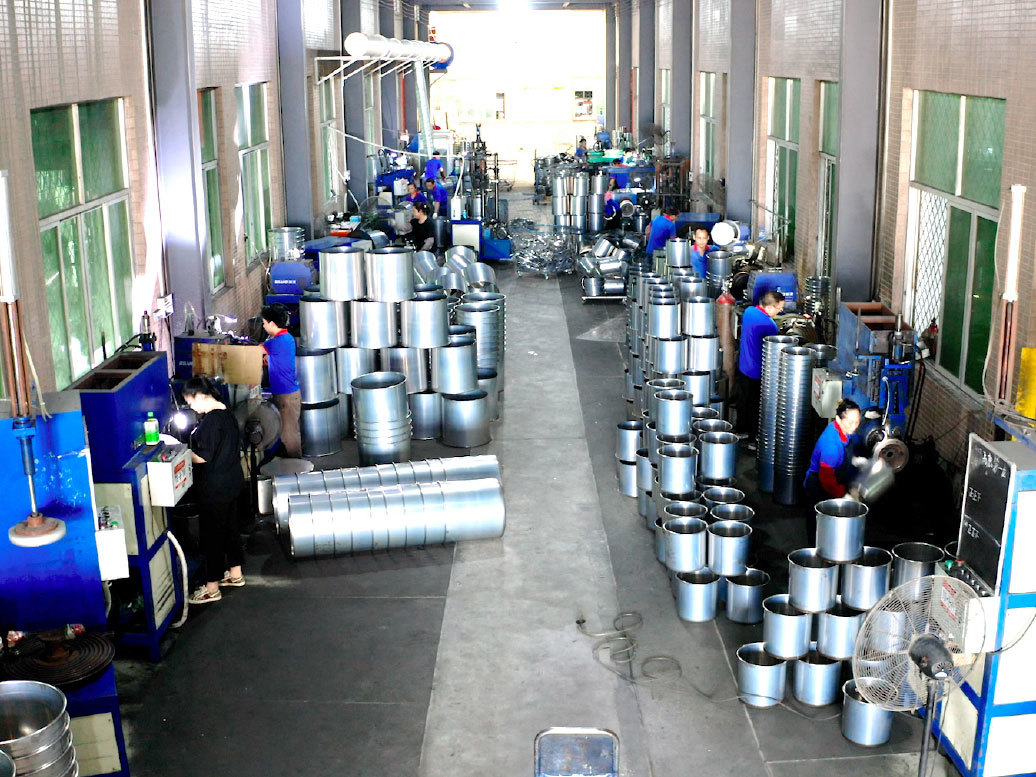
Chuangfa operates across six dedicated production lines within a 100,000-square-metre facility in Caitang Town, covering stainless steel coil, wire drawing, mould heat treatment, industrial furnace components, and finished kitchenware. This manufacturing footprint answers each of the above questions from direct operational capacity — not from contracted third-party arrangements. Procurement teams can review the full product range and OEM service details for Chuangfa (Chaozhou Chao'an District Hongfa Hardware Industrial Co., Ltd.) at https://en.hongfasteel.com/.
Q1: Which certifications genuinely matter for stainless steel square plates, and what does each actually cover?
The distinction between certification types matters enormously here. FDA compliance under 21 CFR governs food contact materials in the US market. For metallic tableware, this primarily concerns alloy composition and the absence of restricted substances — it does not require pre-market registration. Importantly, a supplier describing their product as "FDA certified" is typically referencing material-level compliance, not a product-specific federal approval.
LFGB certification applies to the European market and operates differently. It requires finished-product migration testing — exposing the completed plate to acetic acid and citric acid solutions under controlled conditions, then measuring leached chromium, nickel, and other elements. This matters specifically for divided square plate designs because pressed internal compartment walls create stress concentration zones during forming. These zones can disrupt the chromium oxide passivation layer, making finished-product testing more informative than material-level certificates alone.
SGS, Intertek, and Bureau Veritas reports are third-party inspection outputs, not regulatory standards. Their value depends entirely on what specific tests the report covers and which product lot it references. A supplier presenting an SGS logo without a traceable report number offers less than it appears to.
Q2: How can buyers verify certification authenticity beyond a document on a supplier's website?
Three verification steps form a practical baseline. First, request the certificate report number and confirm it through the issuing body's online portal — SGS, Intertek, and Bureau Veritas all maintain searchable certificate databases. Second, check that the certificate names the specific product, steel grade, and surface finish being ordered. A certificate issued for a 201-grade tray does not cover a 304-grade square plate. Third, confirm the issuing laboratory holds ISO 17025 accreditation or CNAS recognition — both are searchable through official databases and confirm that the lab's testing methodology meets international standards.
Chuangfa (Chaozhou Chao'an District Hongfa Hardware Industrial Co., Ltd.) applies a seven-step OEM production workflow that includes dedicated quality inspection before shipment. Because the company manages cold-rolled coil processing as an upstream function, material traceability runs from raw input to finished plate — making it possible to tie certification scope to specific production batches rather than generic product categories.
Q3: Why does sourcing square plates from Chaozhou's Caitang Town carry structural advantages over other Chinese production regions?
Three factors distinguish this origin practically. First, certification infrastructure maturity: the Caitang cluster has operated at export scale for decades, producing a regional ecosystem of accredited testing laboratories, experienced export documentation specialists, and compliance advisors. Factories in less-developed manufacturing zones often source these services on an ad hoc basis — creating documentation delays and HS code errors that slow customs clearance.
Second, cold-rolling self-sufficiency: stainless steel tableware quality traces back to the cold-rolled coil used in pressing. Factories controlling their own coil production maintain alloy consistency across repeat orders. Those purchasing from spot market traders introduce batch-to-batch material variation that neither visual inspection nor post-production testing consistently catches.
Third, tooling ecosystem depth: square plates with divided compartments require precision pressing dies that maintain corner radius and wall height consistency across large production runs. Proximity to specialised die fabricators and heat treatment operations within the cluster shortens tooling lead times and supports faster OEM iteration. Chaozhou Chao'an District Hongfa Hardware Industrial Co., Ltd. lists mould heat treatment as an in-house production capability — directly relevant to the dimensional consistency of divided square plate configurations across multi-batch orders.
Q4: What surface finish standards should a certified square plate meet for commercial food service?
Two specifications carry the most practical weight. Internal corner radius at compartment junctions should reach a minimum of 3mm. Sharp 90-degree internal angles create cleaning dead zones that survive standard dishwashing cycles and accumulate bacterial biofilm over time. Surface roughness on food-contact interior surfaces should measure below Ra 0.8 micrometres — the threshold commonly referenced in EU and North American commercial kitchen equipment standards. Surfaces within this range resist bacterial adhesion and simplify hygiene compliance during regular kitchen audits.
Chuangfa's Square Dish Stainless Steel Divided Plate for Bento Meals addresses both of these service contexts. The multi-compartment design keeps food portions separated during transport and service. Furthermore, because Chuangfa manages wire drawing as an upstream production step, surface texture parameters develop during material preparation — not as a corrective finishing step applied after pressing.
Q5: How does OEM branding work for square plates, and what protects a buyer's design during production?
OEM branding for stainless steel square plates typically covers logo engraving on plate undersides, custom packaging design, and in some cases proprietary compartment configurations that distinguish the client's product from standard catalog items. The IP risk that often goes unaddressed is tooling ownership. Unless contractual terms explicitly assign tooling ownership or restrict the factory from producing similar configurations for other clients, the factory retains the right to reuse that tooling after the contract concludes.
Buyers commissioning custom compartment layouts should negotiate tooling exclusivity before production begins — not after samples arrive. Additionally, design registration with CNIPA (China National Intellectual Property Administration) provides enforceable rights within China's legal system independent of any contractual relationship with the supplier. Chuangfa's OEM process includes a formal contract signing stage before proofing begins, creating a documented checkpoint where IP-related terms can be confirmed and recorded before tooling modification starts.
Q6: What questions quickly distinguish a genuine manufacturer from a trading company reselling certified goods?
Four questions expose the difference efficiently. Ask whether a factory visit during active production is possible — a manufacturer accommodates this, a trading company cannot. Request the raw material procurement records from the previous production month — a vertically integrated factory maintains coil inventory logs; a trader does not. Ask for the in-house tooling modification lead time for a new compartment configuration — a factory with die-making capability gives a specific answer, typically between 15 and 30 days. Finally, request the heat treatment certificate for the tooling used in the product — only factories with in-house mould heat treatment capacity can produce this documentation from their own records.
Chuangfa operates across six dedicated production lines within a 100,000-square-metre facility in Caitang Town, covering stainless steel coil, wire drawing, mould heat treatment, industrial furnace components, and finished kitchenware. This manufacturing footprint answers each of the above questions from direct operational capacity — not from contracted third-party arrangements. Procurement teams can review the full product range and OEM service details for Chuangfa (Chaozhou Chao'an District Hongfa Hardware Industrial Co., Ltd.) at https://en.hongfasteel.com/.
Hongfa Hardware Industrial Co., Ltd.
+ +86 15918938056
email us here
Visit us on social media:
Facebook
TikTok
X
Legal Disclaimer:
EIN Presswire provides this news content "as is" without warranty of any kind. We do not accept any responsibility or liability for the accuracy, content, images, videos, licenses, completeness, legality, or reliability of the information contained in this article. If you have any complaints or copyright issues related to this article, kindly contact the author above.

