

Dangerous New World Screwworm Spreading Across County And State Borders While International Borders Close
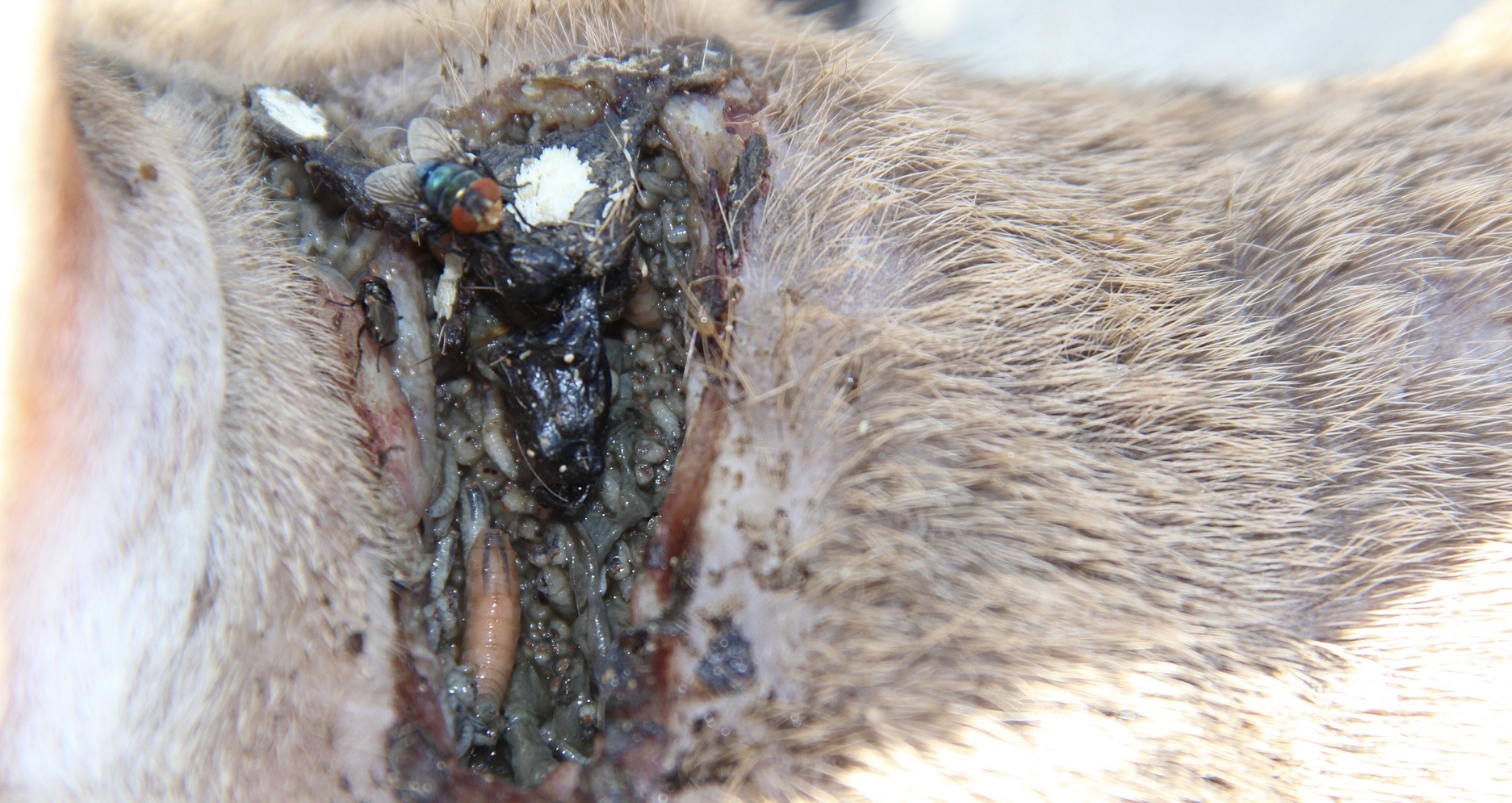
Wound infested with New World Screwworm fly and larvae
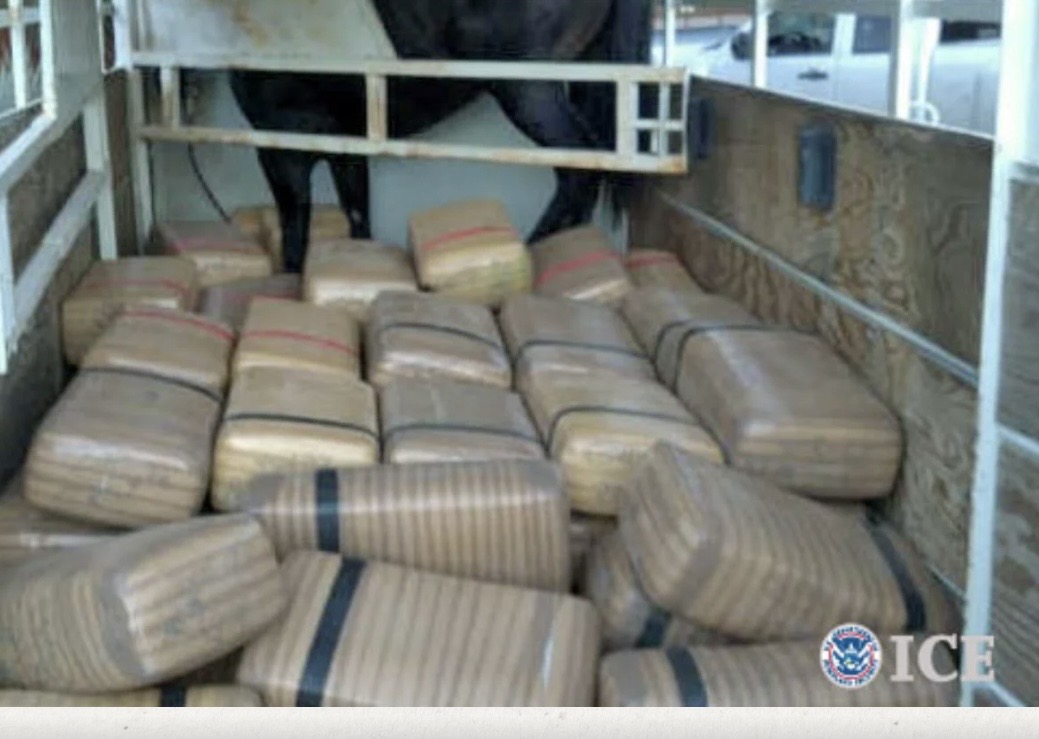
Drugs transported with horses facilitated by the slaughter pipeline
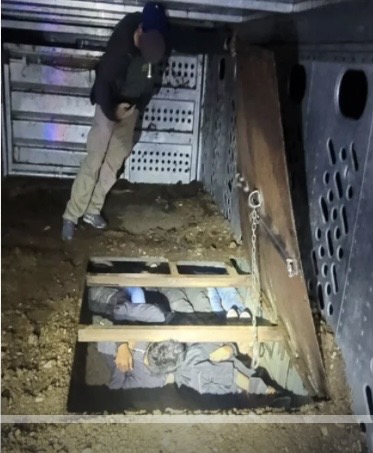
Humans and drugs hidden beneath floorboards of horse transport trailer
How do states protect livestock, pets and people?
New World Screwworm (NWS), Cochliomyia hominivorax, was eradicated in the United States in the 1960’s, though still present in Mexico and endemic in South America and Caribbean countries.
A June 3, 2026, report from The U.S. Department of Agriculture’s Animal and Plant Health Inspection Service (APHIS) confirmed the detection of (NWS) in a 3-week-old calf in Zavala County, Texas. A second case was confirmed less than 6 miles away. At this writing, another calf and a goat were diagnosed in Texas (different counties) as was a dog in New Mexico.
Presence of NWS has been brought to the attention of 140 leaders in critical border and agricultural states by HPLC.
This flesh-eating parasite can affect livestock including cows, goats, horses and pigs as well as pets and wildlife. Less frequently, it affects birds and humans.
Female Screwworm flies mate once, lay 200-300 eggs in open wounds or around body orifices, eggs hatch in 5-7 days, the flesh-eating maggots aggressively feed and expand wounds causing severe pain. Full-grown larvae drop off the animal, burrow into soil, form pupal casings and mature into adult flies. This process can range from 7 to 54 days.
NWS cannot survive Canadian winters, but the Canadian border has closed, by order of the Canadian Food Inspection Agency (CFIA), to animals that have been in Texas within 21 days, to mitigate the spread of NWS. CFIA reports US states are taking similar measures.
NWS in Texas triggered current border closings prohibiting horse transport into Mexico and Canada. Evidence presented by HPLC should move authorities to close borders beyond when the NWS infestation is controlled.
HPLC investigations revealed that transport of horses to slaughter disguises crimes, including:
Drug Smuggling
Zoonotic diseases
Human trafficking
Horse theft
Illegal horse butchering and meat sales
Extortion
Money laundering
Drug smuggling has several incarnations related to horse slaughter. Drugs are hidden beneath floorboards in horse trailers or in forward compartments with horses loaded in the back compartments. Most heinous of these practices is that of using the horses themselves to carry the drugs. Packets of drugs, inserted into the vagina or uterus of mares, or stomachs via a nasal-gastric tube, can be retrieved via a tether on the packet. Another barbaric method is to make incisions creating pockets under the skin and inserting packets of drugs for hiden transport. These generate pain, at best, and at worst- torturous deaths when drug packets rupture, causing infections or deadly colic. Horses shipped to slaughter in Mexico are sometimes rejected. “Rejected” horses become drug carriers. Drug cartels functioning in or through Mexico have easy access to horses shipped in for slaughter and out when ‘rejected’.
Zoonotic diseases, communicable between animals and humans, can be caused by parasites, viruses, bacteria or fungi. Proximity of humans to horses when humans are packed in horse transport vehicles, facilitates the spread of the zoonotic diseases. Diphtheria, contracted in horses by extended exposure to infected humans has been diagnosed in horses rescued from the slaughter pipeline.
Human-trafficking and sex-trafficking have been exposed by informants.
Horse thefts, masked by a false paper trails as horses enter the pipeline, add another criminal element.
Illegal horse meat is sold by blackmarket butchers. DNA testing, done by HPLC, proves horse meat has been sold to restaurants and food trucks. Horse meat sales in Texas and Florida have been verified. Informants report refrigerator trailers at auctions used as illegal butchering sites. Drugs used in horses are toxic for humans, making sale of unregulated, untested meat dangerous to consumers.
Extortion, or blackmail, in the form of threats that horses will ship to slaughter draw another form of illegal cash into the slaughter pipeline.
Money laundering becomes part of the horse slaughter pipeline as most auctions prefer to deal in cash or charge high transaction fees if other payment methods are used. Hundreds of thousands of dollars change hands without leaving a trace.
Laws in place to protect horses being transported and horses that might encounter them are unenforced. Veterinary Health Certificates and a negative Coggin’s test for Equine Infectious Anemia are required for interstate travel, but there is a loophole. Truckloads of horses, designated for slaughter, are assigned a permit number and ship through Texas without health documentation.
HPLC and other organizations have met with Congressional offices on Capitol Hill, concerning the SAFE Act Amendment in the Build America Act 250 / HR8870. The SAFE Act Amendment has 229 bipartisan cosponsors in the House. By ending the horse slaughter pipeline, the SAFE Act Amendment protects the entire livestock population. Thousands of voters called representatives. A survey by ASPCA showed more than 80% of Americans oppose transporting horses for slaughter. A more recent survey by Advocates for Wild Equine National Grassroots Coalition indicates more than 90% oppose that transport.. Organizations that are pro-slaughter should carefully consider their position, as livestock markets they are guarding are not safe if horses continue to be transported and rejected across borders.
As this is written, self-titled 'kill buyers' are strategizing how they are going to manipulate Canada’s precautions. Simple border restrictions will not stop them.
Britta Hesla, of HPLC, stated, “Horse Plus Legislative Coalition has had more than 140 meetings on Capitol Hill and in key states. We believe that the only way to protect all livestock is to end transport of horses for the purpose of slaughter. It's a criminal organization that must be stopped and we must all reach out to our state and federal legislators to ask them to pass HR8870 with the SAFE ACT included in the legislation. We must end this industry and ask all horse owners to care for their horses lives responsibly and ethically.”
Britta Hesla and Barbara Moore
Horse Plus Legislative Coalition and ECI
britta@horseplus.org 411eci@gmail.com
Legal Disclaimer:
EIN Presswire provides this news content "as is" without warranty of any kind. We do not accept any responsibility or liability for the accuracy, content, images, videos, licenses, completeness, legality, or reliability of the information contained in this article. If you have any complaints or copyright issues related to this article, kindly contact the author above.
